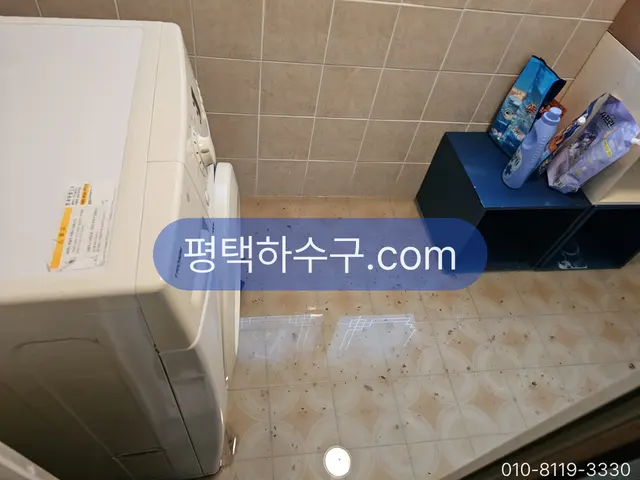
"Every time the washer drains, water comes up around the hose and floods the utility room." This one has a very Korean flavor: the machine pumps water out faster than an old or narrowed drain line can swallow it, and the overflow point is wherever the hose meets the pipe.
What's usually going on
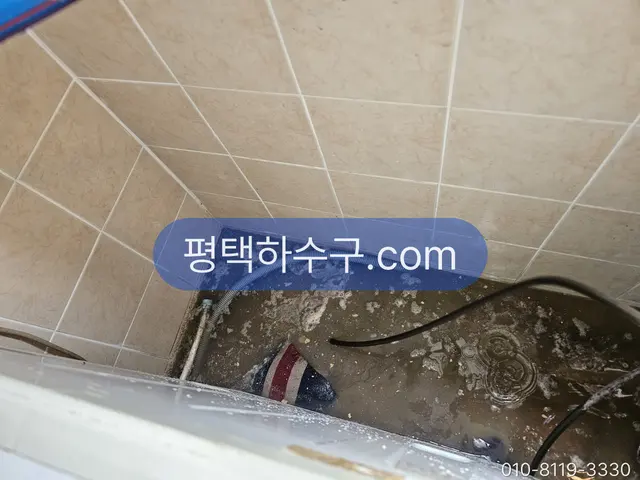
Washer drain lines collect a felt of lint, detergent scum and — in combined kitchen-utility layouts common in villas — kitchen grease. The line narrows year by year until one day the machine's pump outruns it. Because the blockage built slowly, it always 'suddenly' happens during a large load.
Sometimes the machine is innocent: if the floor drain nearby gurgles or smells when the washer runs, the shared line downstream is the real bottleneck. And if overflow happens only during hard rain, you are looking at the monsoon-backup problem instead — a different fix entirely.
How it gets fixed
We clear the standpipe and the run behind it, not just the visible opening — lint felt reforms fast on a half-cleared line. Where the layout sends kitchen water through the same run, jetting the grease out is what actually buys you years instead of months. You will see the difference in how fast the machine drains afterward.
A simple upgrade worth doing while we are there: securing the hose at the right insertion depth. Hoses jammed too deep siphon and overflow; hoses barely inserted jump out under pressure. It is a two-minute fix that prevents both flavors of flood.
FROM THE FIELD
Do this now
- Pause the cycle at the first sign of overflow — do not let it finish draining
- Check whether the nearby floor drain also backs up (that clue matters)
- Wipe up promptly; utility-room water finds the apartment below
- Text us a photo of the hose/standpipe setup with your area
Sounds like your house? Photos beat descriptions — send what you're seeing.